
Land restored. Lives renewed. Markets secured.
Carbon Bank transforms degraded land in Lampung into productive regenerative agricultural infrastructure — connecting soil health, rural livelihoods and commercial supply chains.
of Indonesian rainforest degraded since 1950
currently under management
land and warehouse workers
rural women targeted over 2 years
The challenge
Degraded land is not idle land — it is a growing liability
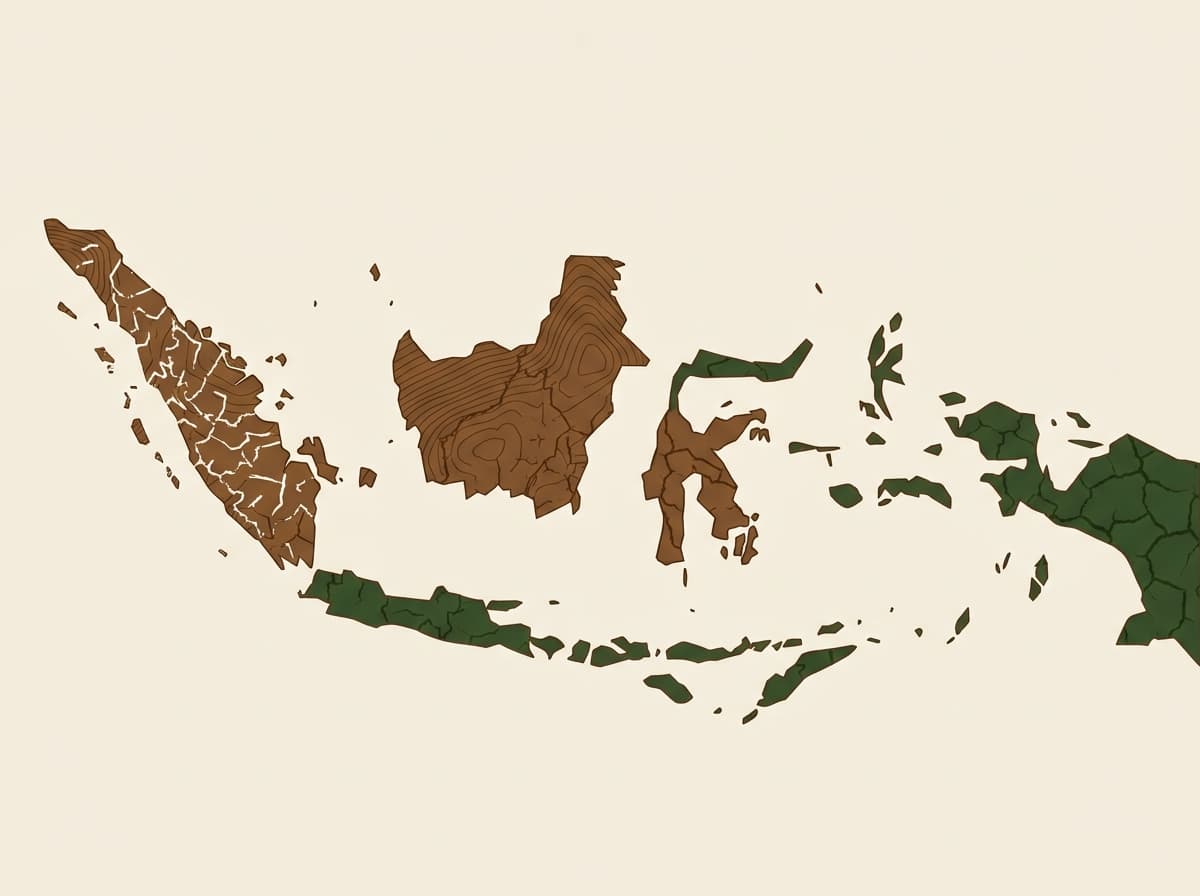
“74 million hectares of rainforest have been logged, burned or degraded in Indonesia since 1950.”
When land loses soil function and productive vegetation, it stops being an asset and becomes a growing liability — harder and more expensive to restore, unable to generate reliable income, and increasingly disconnected from commercial supply chains.
Without a commercial reason to maintain restored land, rehabilitation often ends when funding ends and the land risks returning to underuse.
How Carbon Bank works
Three pillars. One integrated model.
Land Restoration
Soil health first
We rehabilitate degraded land by improving soil conditions and establishing regenerative vegetation systems — the foundation of long-term productivity.
Women's Activation
Paid work at scale
Rural women are integrated as paid operators, workers and suppliers — building practical skills, recurring income and access to formal agricultural supply chains.
Commercial Biomass
Revenue sustains restoration
Forage, biomass and seedling sales create recurring economic incentive to maintain restored land — long after project funding ends.
Operating snapshot
Early results. Clear trajectory.
Carbon Bank is in revenue-generating early commercial stage. Current operations provide the foundation for planned scale.
Land under management
Workers in paid roles
B2B transactions
Women targeted over 2 years
FY2025 Operating Revenue
Excludes grant funding, loans and non-operating income
IDR 751.019.212
Theory of change
Why productive land needs a commercial reason to stay restored
Carbon Bank's theory of change starts from the principle that degraded land will only remain productive when local communities have a recurring economic reason to maintain it.
Read full theory of changeWe do
- Rehabilitate degraded and underutilised land
- Improve soil condition
- Establish nurseries and regenerative forage systems
- Organise rural women and local workers into paid roles in planting, land stewardship, harvesting, primary processing and local supply
To deliver
- Productive hectares
- Improved vegetation
- Viable planting materials
- Marketable biomass
- Paid workdays
- Trained workers
- Recurring buyer relationships
So families achieve
- Women and low-income rural households gain practical skills
- Additional income for rural families
- Access to commercial agricultural supply chains
- Continued land maintenance and expansion beyond the grant period
Partner with Carbon Bank
Whether you are a commercial buyer, grant funder, land partner or project collaborator — we would like to hear from you.
Questions? Contact us at maya@carbonbank.id